

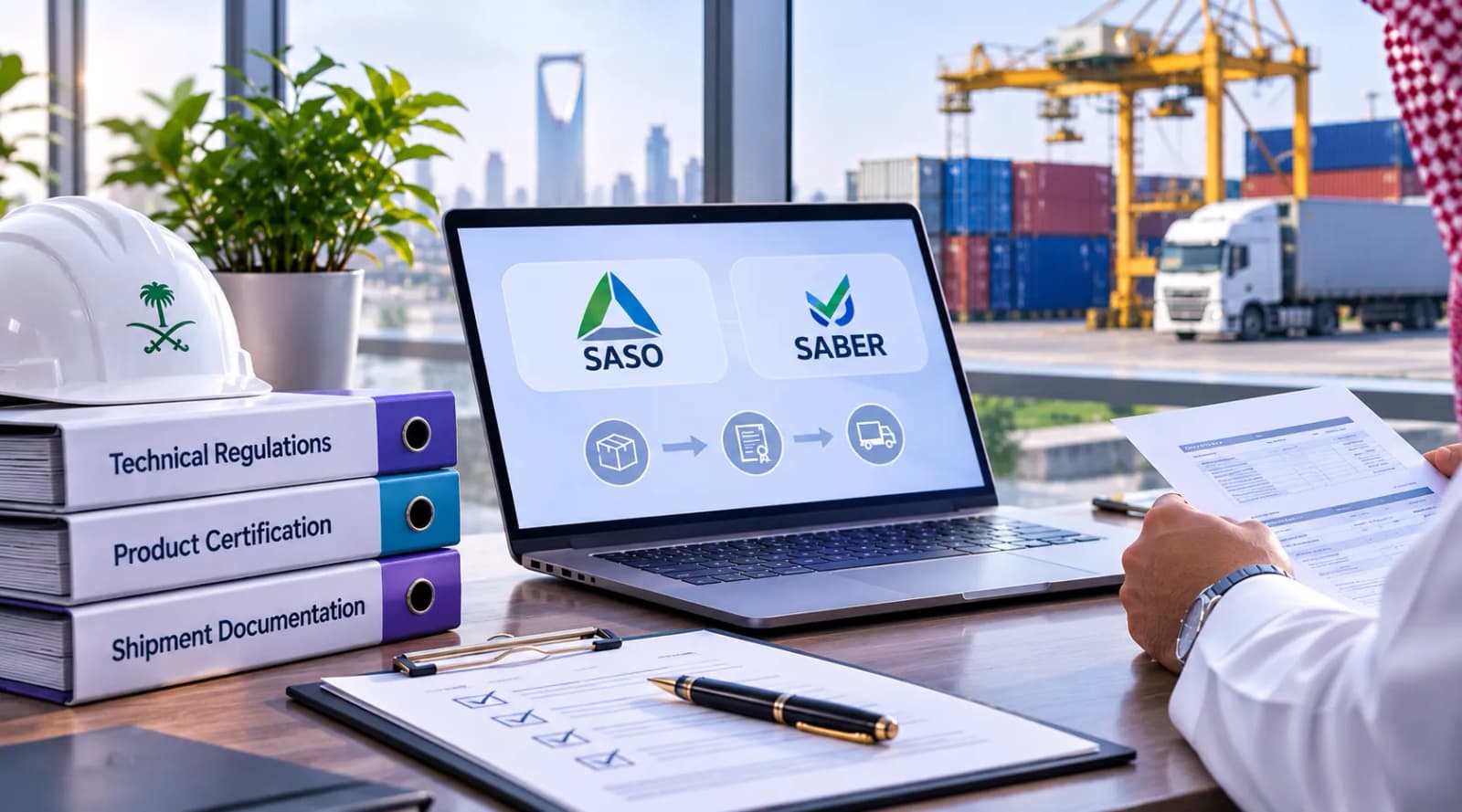
Importing products into Saudi Arabia requires compliance with applicable technical regulations, product safety standards, and conformity assessment procedures.
For manufacturers, distributors, and importers, understanding SASO SABER requirements in Saudi Arabia is essential to preparing the correct documentation and avoiding unnecessary shipment delays.
This guide explains the difference between SASO and SABER, how product and shipment conformity certificates work, and the steps businesses should follow before importing goods into the Kingdom.
What Are SASO and SABER?
Although the terms are frequently used together, SASO and SABER serve different purposes in Saudi Arabia's product compliance system.
SASO – Saudi Standards, Metrology and Quality Organization
SASO is the Saudi authority responsible for developing standards, technical regulations, and product conformity requirements within its regulatory scope.
Its technical regulations establish applicable safety, quality, performance, and other requirements for various product categories.
SABER – Saudi Product Conformity Platform
SABER is an electronic platform that facilitates product registration, conformity assessment, and shipment certification for applicable products entering the Saudi market.
Through SABER, importers can register products, coordinate with accepted conformity assessment bodies, and obtain the required documentation.
Which Products Require SASO and SABER Compliance?
Not every product follows the same regulatory pathway.
SASO technical regulations cover various product categories, including:
- Electrical and electronic equipment
- Construction and building materials
- Machinery and industrial equipment
- Textiles and consumer products
- Mechanical and metal products
- Personal protective equipment (PPE)
Depending on the product, conformity assessment, testing, labeling, or other regulatory requirements may apply.
For example, electrical products may be subject to specific safety requirements, while construction materials may require different technical documentation.
Product vs. Shipment Certificates of Conformity
Two important documents in the SABER compliance process are the Product Certificate of Conformity and the Shipment Certificate of Conformity.
| Certificate | Purpose |
|---|---|
| Product Certificate of Conformity (PCoC) | Demonstrates conformity with applicable technical regulations for products requiring product-level certification. |
| Shipment Certificate of Conformity (SCoC) | Supports the import clearance process for a particular shipment using registered product and shipment information. |
Product Certificate of Conformity (PCoC)
For regulated products requiring third-party conformity assessment, importers submit the relevant product information and technical evidence through SABER.
An accepted conformity assessment body reviews the application against applicable requirements.
Testing or additional technical documentation may be necessary depending on the product and regulation.
Shipment Certificate of Conformity (SCoC)
For applicable commercial imports, a shipment certificate is issued through SABER using the registered products and relevant shipment information.
The process generally includes invoice details, product quantities, and other required shipment data.
What About Non-Regulated Products?
Products not subject to a specific SASO technical regulation may follow an applicable self-declaration route rather than third-party product certification.
However, non-regulated status does not automatically eliminate shipment documentation requirements.
SABER Registration Process in Saudi Arabia
Businesses preparing to import goods into Saudi Arabia should follow a structured compliance process.
Step 1: Identify the Product and Applicable Regulations
Review the product's specifications, HS code, intended use, manufacturer information, and applicable SASO technical regulations.
This helps establish whether product conformity certification, self-declaration, or another regulatory route is required.
Step 2: Register the Product in SABER
The Saudi importer registers the relevant product information on the SABER platform.
Accurate product descriptions, model numbers, and manufacturer details are important for avoiding inconsistencies during assessment.
Step 3: Prepare Technical Documentation
Collect the documents required for the applicable product category.
These may include technical datasheets, test reports, declarations, product labels, and manufacturer information.
Step 4: Complete the Conformity Assessment
Where a Product Certificate of Conformity is required, select an accepted conformity assessment body through SABER.
The body reviews the submitted evidence and determines whether the product meets the applicable requirements.
Step 5: Obtain the Shipment Certificate
Once the required product-level documentation is in place, submit the relevant shipment information through SABER.
Complete the shipment certification process according to the applicable requirements before proceeding with import clearance.
Documents Required for SASO/SABER Compliance
The exact documentation depends on the product, technical regulation, and conformity assessment route.
A practical preparation checklist may include:
- Saudi importer or company registration details
- Product descriptions and HS codes
- Manufacturer and country-of-origin information
- Product models and technical specifications
- Product photographs and labeling information
- Technical datasheets and user manuals
- Laboratory test reports, where required
- Existing conformity certificates or declarations
- Commercial invoice and shipment details
Importers should verify whether product-specific labeling, testing, or additional regulatory approvals are required before submitting an application.
If the importing company is not yet established, our guide on how to start a business in Saudi Arabia explains the registration steps that come first.
Common SASO/SABER Compliance Mistakes
Incomplete or inconsistent documentation can create unnecessary complications during product registration and shipment processing.
Common mistakes include:
- Incorrect product classification: Using an unsuitable HS code or product description.
- Missing technical evidence: Submitting incomplete test reports, specifications, or declarations.
- Incorrect model information: Providing inconsistent product or manufacturer details.
- Unverified labeling: Failing to review applicable Saudi labeling requirements.
- Late compliance preparation: Starting the certification process only after shipment arrangements have been finalized.
A product-specific regulatory review before shipment can help identify documentation gaps early.
Get Professional SASO/SABER Compliance Support in Saudi Arabia
Understanding SASO technical regulations and SABER certification procedures is essential for businesses importing products into the Kingdom.
Nour Solutions provides SASO/SABER consultancy and regulatory compliance support for importers, manufacturers, distributors, and industrial suppliers across Saudi Arabia, including Al Khobar, Dammam, Jubail, Riyadh, and Jeddah.
Our services include product classification reviews, technical documentation preparation, conformity assessment coordination, SABER registration support, and shipment certification assistance.
Explore our SASO/SABER & Regulatory Compliance Services in Saudi Arabia to understand the applicable compliance requirements for your products.
Official Resources
- Saudi Standards, Metrology and Quality Organization (SASO) — Standards, technical regulations and SASO's electronic services.
- SABER Electronic Platform — Product registration, conformity certificates and shipment certificates.
- SABER — Technical Regulations — The technical regulations applied through the platform, by product category.
Frequently Asked Questions
Is SABER mandatory for all products imported into Saudi Arabia?
SABER is used for applicable commercial product registration and conformity procedures. The required process depends on the product category, applicable regulations, and import circumstances.
What is the difference between SASO and SABER?
SASO is the Saudi standards and technical regulatory authority, while SABER is the electronic platform used to manage applicable product registration and conformity certification procedures.
Do non-regulated products need a conformity certificate?
Products eligible for the non-regulated route may use a self-declaration instead of a third-party Product Certificate of Conformity. Applicable shipment certification and other requirements must still be checked.
How long does SABER certification take?
Processing times vary depending on product classification, technical documentation, testing requirements, and conformity assessment. Importers should allow sufficient preparation time before shipment.
Can one SABER certificate cover multiple shipments?
A product conformity certificate may support applicable products during its validity period, but shipment certificates are generally required for individual commercial consignments.